Why this work exists
Across multiple industries and operational environments, one pattern remains consistent. As companies grow, execution becomes more complex, but structure does not evolve at the same pace. The result is operational friction, founder dependency, and stalled growth. Legacy Line Operations was built to solve this problem through a structured, repeatable approach to operational clarity.
Legacy Line Operations was born from a clear observation: founders and leadership teams often struggle not for lack of vision, but for lack of structure. In early engagements, we saw one pattern again and again — leaders with enormous potential held back by operational friction, unclear roles, and systems that didn’t scale.
That inspired a simple idea:
It’s not just about efficiency — it’s about building systems leaders can trust, so people thrive and organizations grow sustainably
Who We Partner With
Founders seeking operational stability
Leadership teams scaling rapidly
Organizations ready to move from reactive to intentional execution
How We Support Your Growth
Operational Assessment: Diagnose bottlenecks and uncover friction points
System Design & Documentation: Build structured, repeatable workflows
Ongoing Partnership: Provide fractional operational support during growth phases
Implementation Support: Ensure new systems take root and deliver results
What Makes Us Different — Differentiators + Values
Our Operational Philosophy:
People-centered systems that support human decision-making
Discipline plus adaptability — structure that evolves
Accountability built into workflows, not tacked on later
Long-term scalability over short-term efficiency

Founder & Principal
I help founders stop being the ceiling.
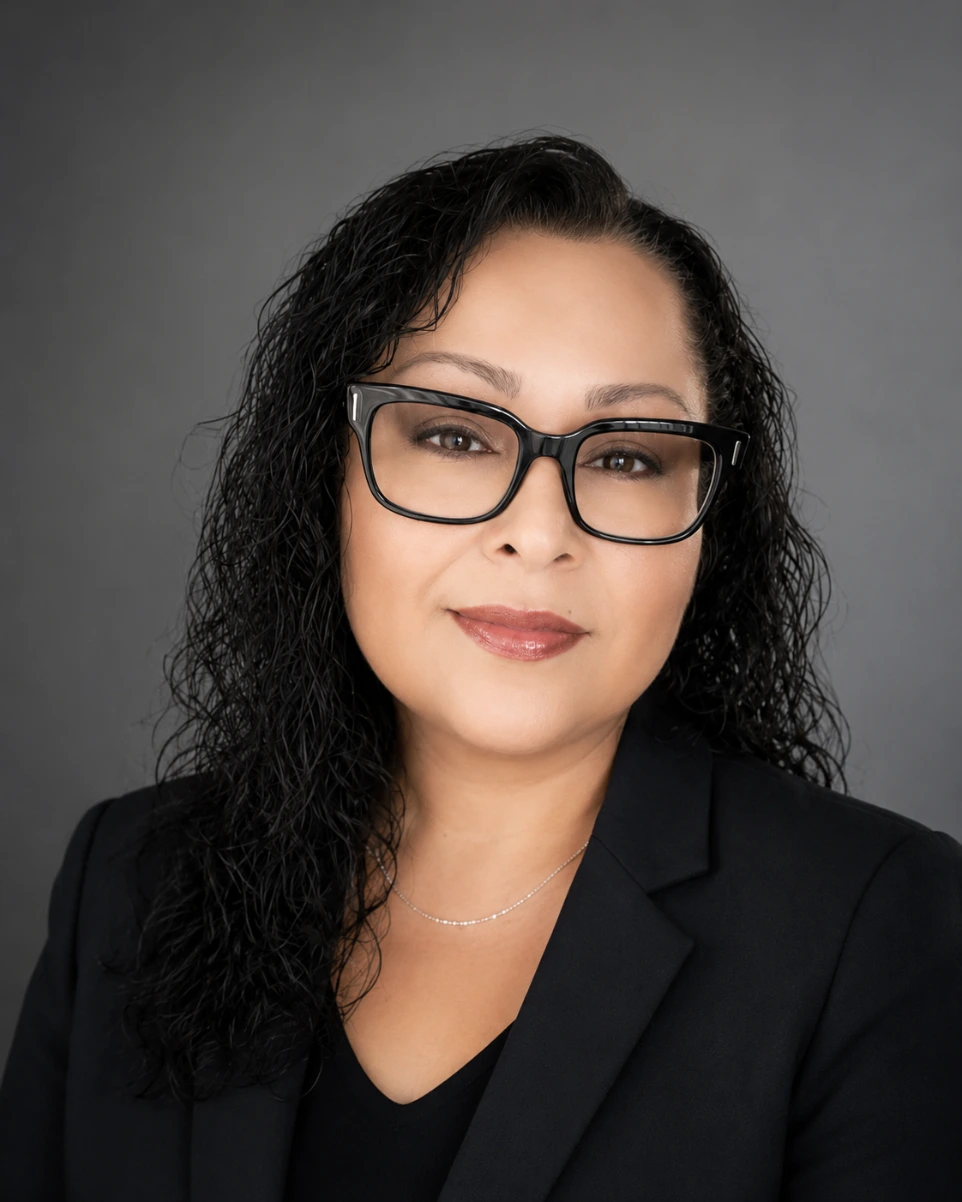
I'm Leslie — operational architect, cross-industry strategist, and the person founders call when growth has stalled but no one can explain why.
Legacy Line Operations was founded on a simple conviction: structure creates freedom. When systems are built with intention, they create stability, shared responsibility, and trust. That belief doesn't come from a textbook. It comes from a life shaped by it.
I was raised on military bases, where accountability meant stewardship, not control. My father — a Vietnam Veteran, former U.S. Marine Corps Senior Drill Instructor, Electrical Contractor, and ordained United Methodist Minister — led through discipline, service, and integrity. My mother's steady consistency taught me that sustainable success is built slowly and in service of others. That foundation is woven into every engagement I bring to this work.
I didn't start in a consulting firm. I began at 18 in a nonprofit serving at-risk youth in Oxnard, California, and spent the next 30 years working from the inside — across nonprofit, aerospace, church administration, banking, healthcare, logistics, and industrial service. What I kept seeing, regardless of industry or org size, was the same pattern: the founder whose instincts built the company had become the thing preventing it from scaling. That observation became a framework. That framework became Legacy Line Operations.
Throughout every role, one theme remained constant: stabilize the workflow, clarify responsibility, protect cash flow, support the people doing the work. In 2023, I was nominated for Tradeswoman of the Year at Grundfos CBS.
I work exclusively with founder-led companies between 10 and 75 employees — the stage where structure must evolve or growth stops. My approach is diagnostic, architectural, and relational. I listen first. I diagnose carefully. I build systems that are practical, not theoretical.
I'm a 3rd-generation Mexican-American, a single mom, and a first-generation consultant. I'm also completing a BA in Organizational Leadership at Arizona State University, where my academic research is actively validating the frameworks I've developed through practice. Legacy isn't just the name of my company — it's the reason I built it.
To contact me, please email me at leslieannvarela@gmail.com
"Most operational dysfunction isn't a people problem or a strategy problem — it's a structure problem. And structure can be fixed."